Finley Hansen · 31 August 2026
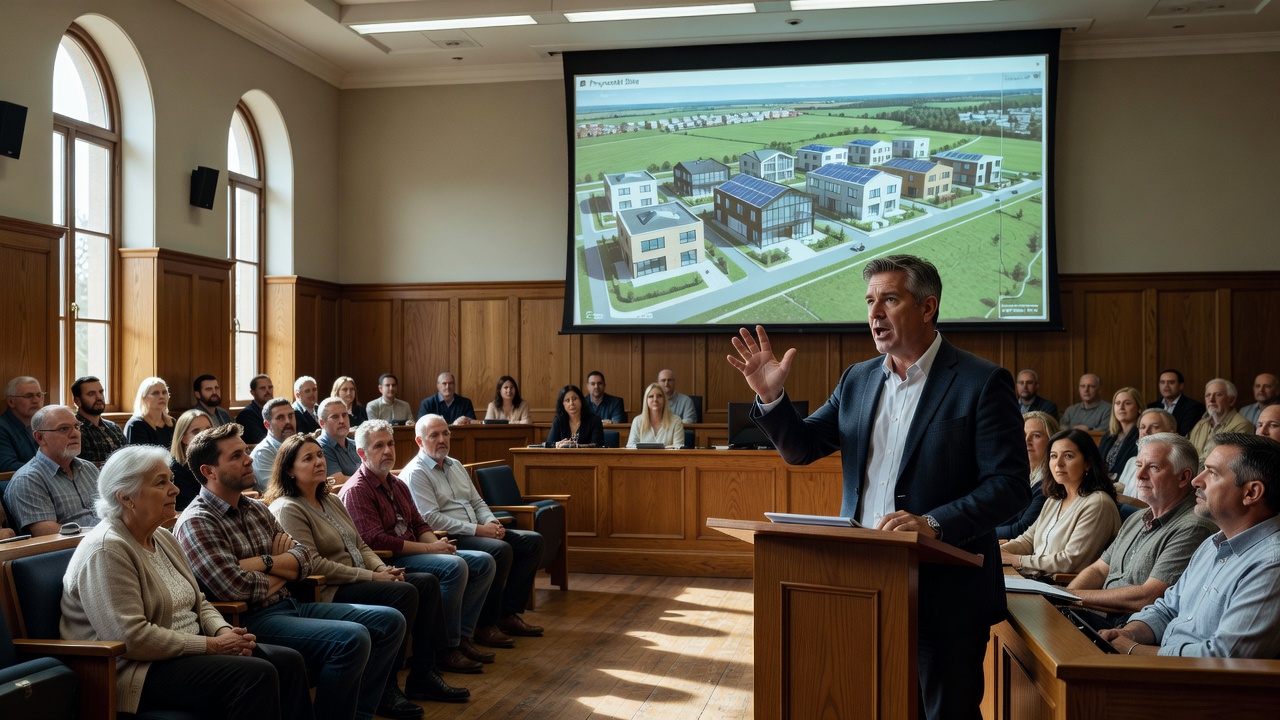
The Feldhain municipal council convened on Tuesday evening to deliberate on ambitious new housing plans targeting the eastern fields area. Officials presented a comprehensive proposal aimed at alleviating housing shortages in the growing community. The discussion highlighted both opportunities and challenges associated with urban expansion into previously undeveloped land. Attendance was high as residents and stakeholders gathered to hear the details.
Proposal Overview and Specifications
Under the proposed plan approximately 300 housing units would be built across 50 hectares of the eastern fields. This includes a variety of dwelling types such as detached houses townhouses and multi-story apartments to cater to different demographics. The development would incorporate sustainable features like solar panels and rainwater harvesting systems. Transportation links would be enhanced with new bus routes and cycle paths connecting to the town center. Environmental consultants assured that protected species habitats would be preserved through designated buffer zones. The total estimated cost of the project stands at 45 million euros with funding from both public and private sources. Additional details revealed that the project timeline spans three years beginning with site preparation in the spring. Infrastructure upgrades would also include expanded water and sewage systems to support the new population.
Council Discussions and Stakeholder Views
Council members engaged in a thorough debate lasting several hours. Proponents argued that the housing is essential to accommodate the influx of new families and workers attracted by local industries. They emphasized economic benefits including job creation during construction and increased tax revenue. Opponents raised issues regarding potential flooding risks as the fields are near a river and the impact on local farming communities who rely on that land. Public participation was encouraged with several citizens addressing the council. Local environmental groups submitted petitions against the rezoning citing biodiversity concerns. The mayor noted that further studies would be commissioned before a final decision. Next steps include public consultations and revisions to the master plan based on feedback received. Analysts predict that approval could lead to similar developments in other peripheral areas of the region.